Description
This program trains professionals with the skills to design, build and maintain sustainable infrastructures, such as buildings, roads, bridges and hydraulic systems. Also, they can apply knowledge of mathematics, physics and technology to solve problems and improve the quality of life of society.
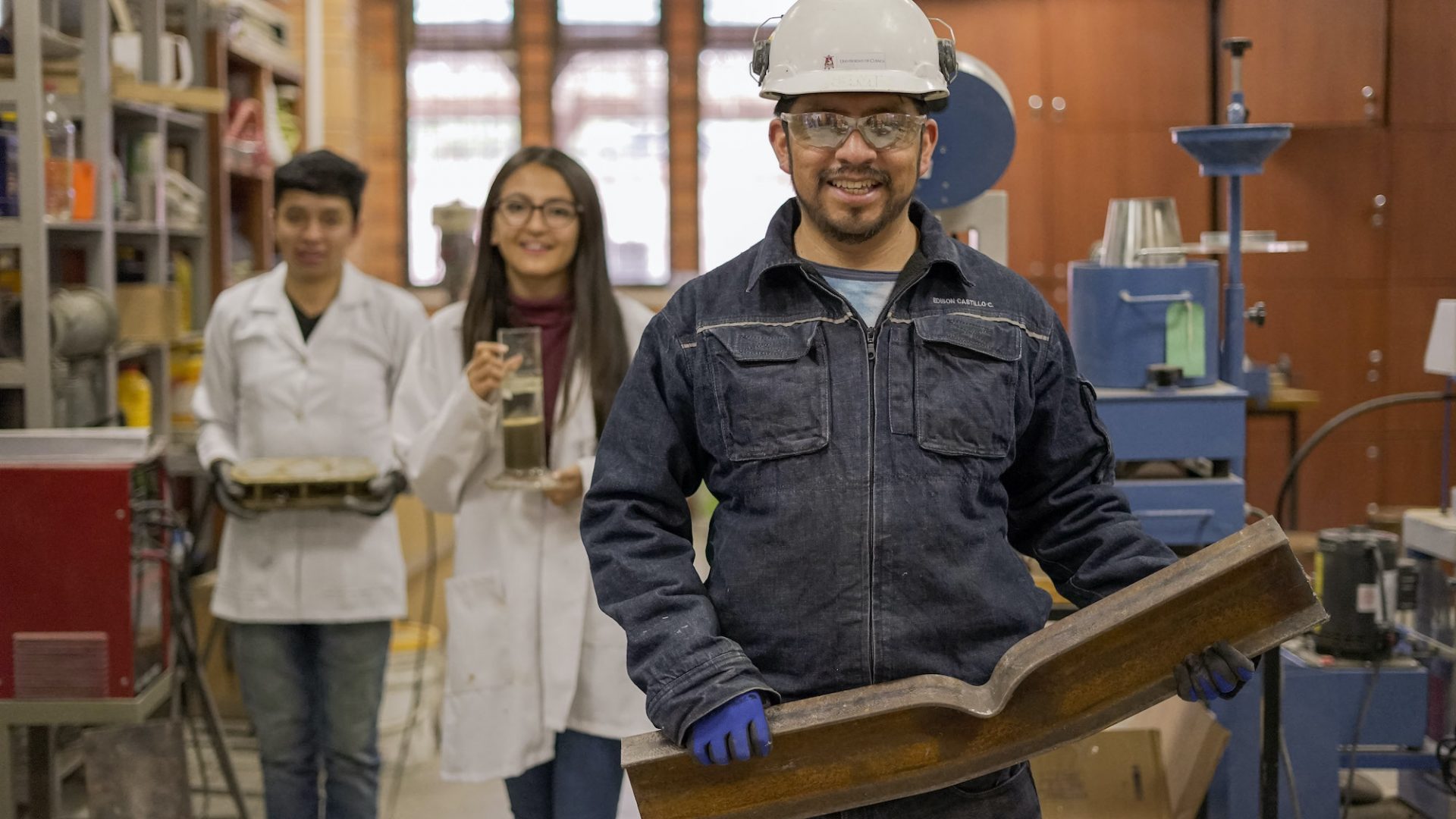
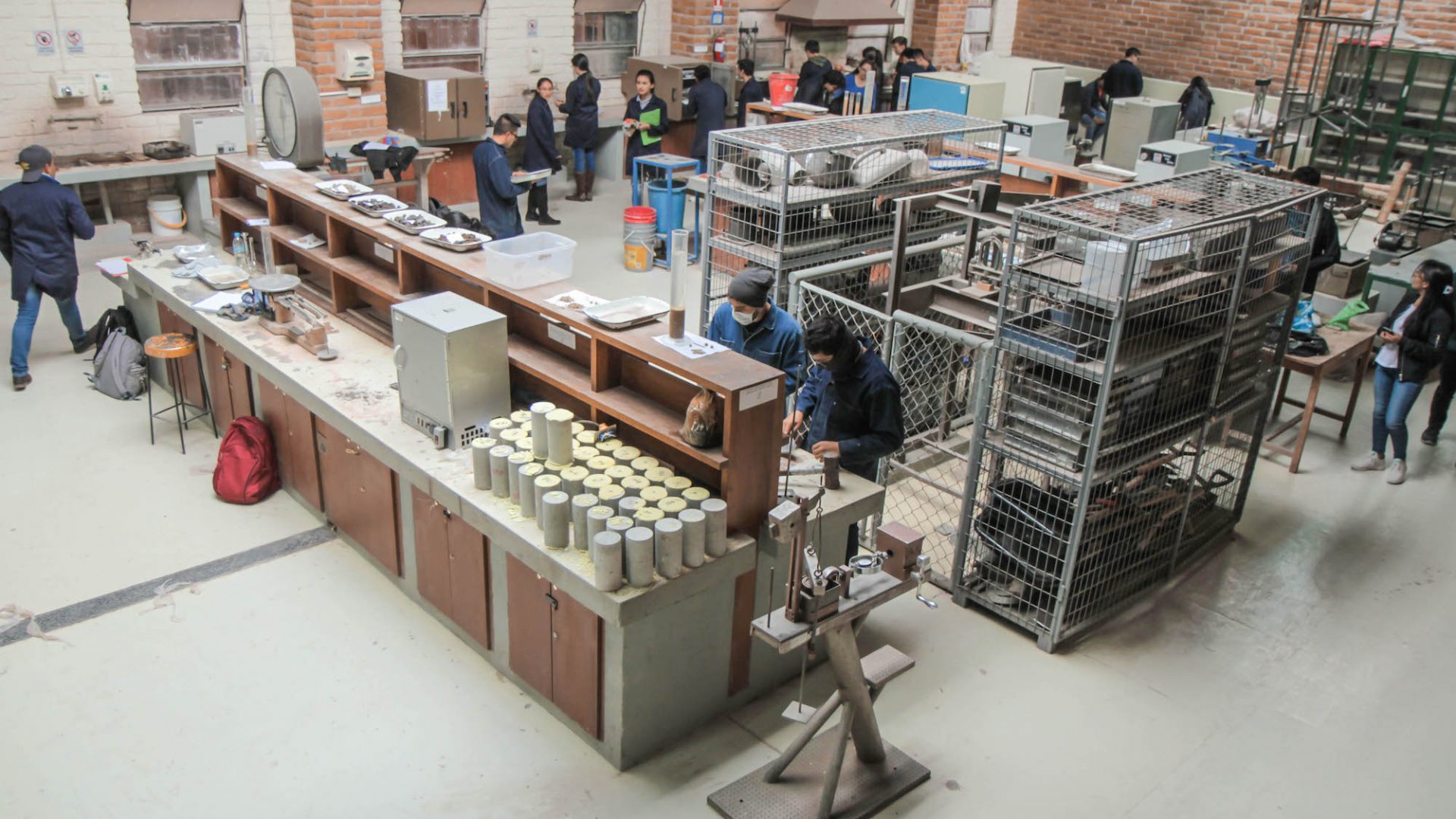
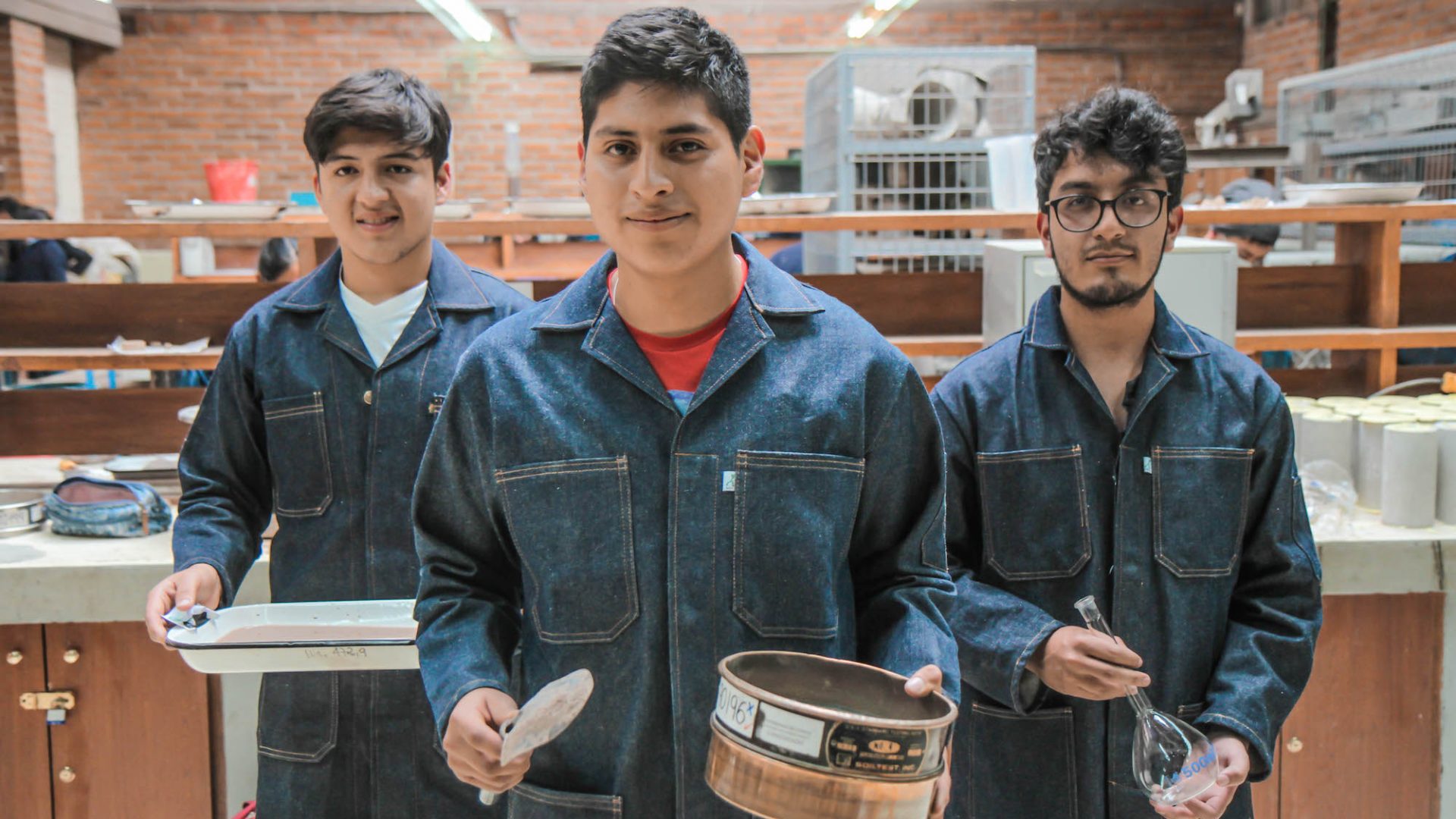
The learning environment of the program is enriched by specialized laboratories in Physics, Geotechnics and Materials, Soil Hydrophysics, Hydraulics and Fluid Dynamics, Sanitary Engineering, Water Quality, and Geomatics.
Students also have access to computer centers for using numerical models and information technologies. Additionally, they apply their knowledge in the study, design, and construction of projects related to transportation, buildings, potable water, sewer networks, water treatment, solid waste management, irrigation systems, land use planning, hydroelectric generation, and more.
General Information
| Degree Awarded: | Civil Engineer |
| Level: | Third Level |
| Duration: | 10 semesters // 5 years |
| Mode of Study: | In-person |
| English Proficiency Requirement: | B1 // 10th semester |
Professional Profile
Upon completing their training, graduates will be able to:
- Construct civil engineering projects for public and private enterprises.
- Supervise engineering projects in general.
- Produce and control the quality of construction materials.
- Conduct technical studies and designs in the areas of Structures, Construction and Project Management, Geotechnics, Roads and Transportation, Hydraulics, Sanitary Engineering, and Water Resources, related to technological sciences, environmental technology sciences, and earth sciences.
Field of Employment
- Public organizations: Municipalities, Potable Water and Sewerage Companies, Provincial Governments, Ministry of Public Works, Development Secretariats, etc. for the management, administration, and execution of infrastructure projects.
- Companies related to natural resources: Mining companies, hydroelectric generation and marketing companies, etc.
- For the management and administration of specific project processes: hydroelectric generation, water treatment, solid waste management, irrigation engineering projects, etc.
- Private companies: consulting, design, construction, project supervision, etc.
- Civil construction industry.
- Consulting firms for studies and designs in the field of Civil Engineering.
- Research on scientific projects in areas such as Natural Resources, Material Technology, Structures, and Transportation Engineering.
Malla curricular
Nivel 01
MATEMÁTICAS DISCRETAS
FÍSICA GENERAL
INTRODUCCIÓN INGENIERÍA CIVIL
ALGEBRA LINEAL
CALCULO EN UNA VARIABLE
Nivel 02
GRÁFICAS POR COMPUTADOR
CÁLCULO EN VARIAS VARIABLES
PROBABILIDAD Y ESTADÍSTICA
PROGRAMACIÓN CIENTÍFICA
MECÁNICA RACIONAL I
METODOLOGÍA INVESTIGACIÓN
Nivel 03
QUÍMICA APLICADA ING. CIVIL
DISEÑO EXPERIMENTAL
LENG. Y COMUNICACIÓN TÉCNICA
ECUACIONES DIF. ORDINARIAS
MECÁNICA RACIONAL II
TOPOGRAFÍA Y GEODESIA
Nivel 04
GEOLOGÍA APLICADA
MECÁNICA MEDIOS CONTINUOS
GEOMÁTICA PARA INGENIERÍA
MÉTODOS NUMÉRICOS
ECUAC. EN DERIVADAS PARCIALES
RESISTENCIA MATERIALES I
Nivel 05
HIDRÁULICA APLICADA
MATERIALES CONSTRUCCIÓN
CIENCIA ELECTIVA 1
INGENIERÍA AMBIENTAL
RESISTENCIA MATERIALES II
HIDROLOGÍA SUPERFICIAL
Nivel 06
TECNOLOGÍA DEL HORMIGÓN
CIENCIA ELECTIVA 2
RESP. PROFESIONAL Y NORMATIVA
MECÁNICA SUELOS I
ANÁLISIS ESTRUCTURAL I
PROYECTOS INGENIERÍA DEL AGUA
Nivel 07
HORMIGÓN I
DISEÑO HIDROTÉCNICO
CIENCIA ELECTIVA 3
MECÁNICA SUELOS II
ANÁLISIS ESTRUCTURAL II
INGENIERÍA DEL TRANSPORTE
Nivel 08
SERVICIO COMUNITARIO
HORMIGÓN II
AGUA POTABLE
CIENCIA ELECTIVA 4
PAVIMENTOS I
INGENIERÍA CARRETERAS
Nivel 09
UNID. INTEGRACIÓN CURRICULAR I
CIENCIA ELECTIVA 5
PRÁCTICAS LABORALES I
PAVIMENTOS II
ALCANTARILLADO
ESTRUCTURAS ACERO
Nivel 10
METOD. CONSTR. E ING. COSTOS
UNI. INTEGRACIÓN CURRICULAR II
CIENCIA ELECTIVA 6
PROY. INTEGRAL ESTRUCTURAS
PRÁCTICAS LABORALES II
Description
This program trains professionals with the skills to design, build and maintain sustainable infrastructures, such as buildings, roads, bridges and hydraulic systems. Also, they can apply knowledge of mathematics, physics and technology to solve problems and improve the quality of life of society.
Our Numbers
0
Number of students admitted in the academic period september 2025 – february 2026
0
Number of graduates in 2025
0
Number of graduates in 2024
0
Number of students enrolled during the academic period march 2025 – august 2025
Program Educational Objectives
Graduates of the Civil Engineering program at Universidad de Cuenca will be able to achieve the following professional accomplishments within 3-5 years after graduation:
- PEO1: Graduates will solve complex problems using modern tools and technologies, delivering safe, efficient, and sustainable solutions in the design, construction, and evaluation of infrastructure projects.
- PEO2: Graduates will demonstrate effective communication and leadership, contributing to the success of multidisciplinary teams in professional and societal contexts.
- PEO3: Graduates will carry out their professional duties with ethical responsibility, adhering to applicable regulations and promoting practices that support environmental and social sustainability.
- PEO4: Graduates will engage in lifelong learning through professional development, specialization, and complementary training in civil engineering and related fields.
Student Outcomes
At the end of their studies, Civil Engineering graduates are expected to achieve the following student outcomes:
- SO1. An ability to identify, formulate, and solve complex engineering problems by applying principles of engineering, science, and mathematics.
- SO2. An ability to apply engineering design to produce solutions that meet specified needs with consideration of public health, safety, and welfare, as well as global, cultural, social, environmental, and economic factors.
- SO3. An ability to communicate effectively with a range of audiences.
- SO4. An ability to recognize ethical and professional responsibilities in engineering situations and make informed judgments, which must consider the impact of engineering solutions in global, economic, environmental, and societal contexts.
- SO5. An ability to function effectively on a team whose members together provide leadership, create a collaborative environment, establish goals, plan tasks, and meet objectives.
- SO6. An ability to develop and conduct appropriate experimentation, analyze and interpret data, and use engineering judgment to draw conclusions.
- SO7. An ability to acquire and apply new knowledge as needed, using appropriate learning strategies.
Capstone Design Projects
Capstone Projects are an opportunity for students to apply the skills, knowledge, and abilities acquired throughout the program.
No se encontraron docentes con el ID especificado.