Description
This program trains professionals capable of controlling industrial processes that involve physical, chemical and biochemical changes, in order to promote the industrial development of the country in a sustainable and efficient manner. Furthermore, they can contribute to the transformation of materials and energy, with quality, safety, and respect for the environment.
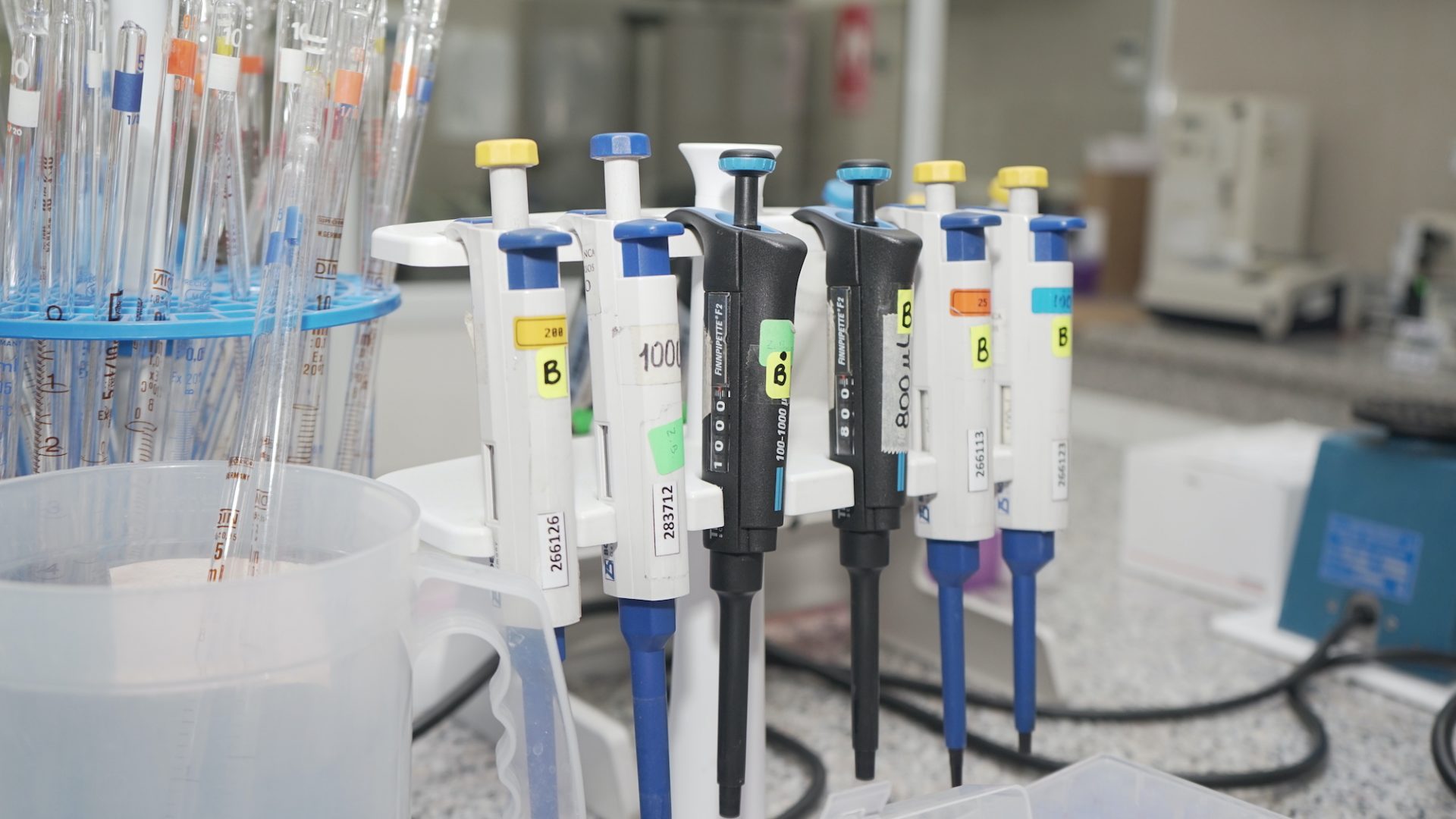

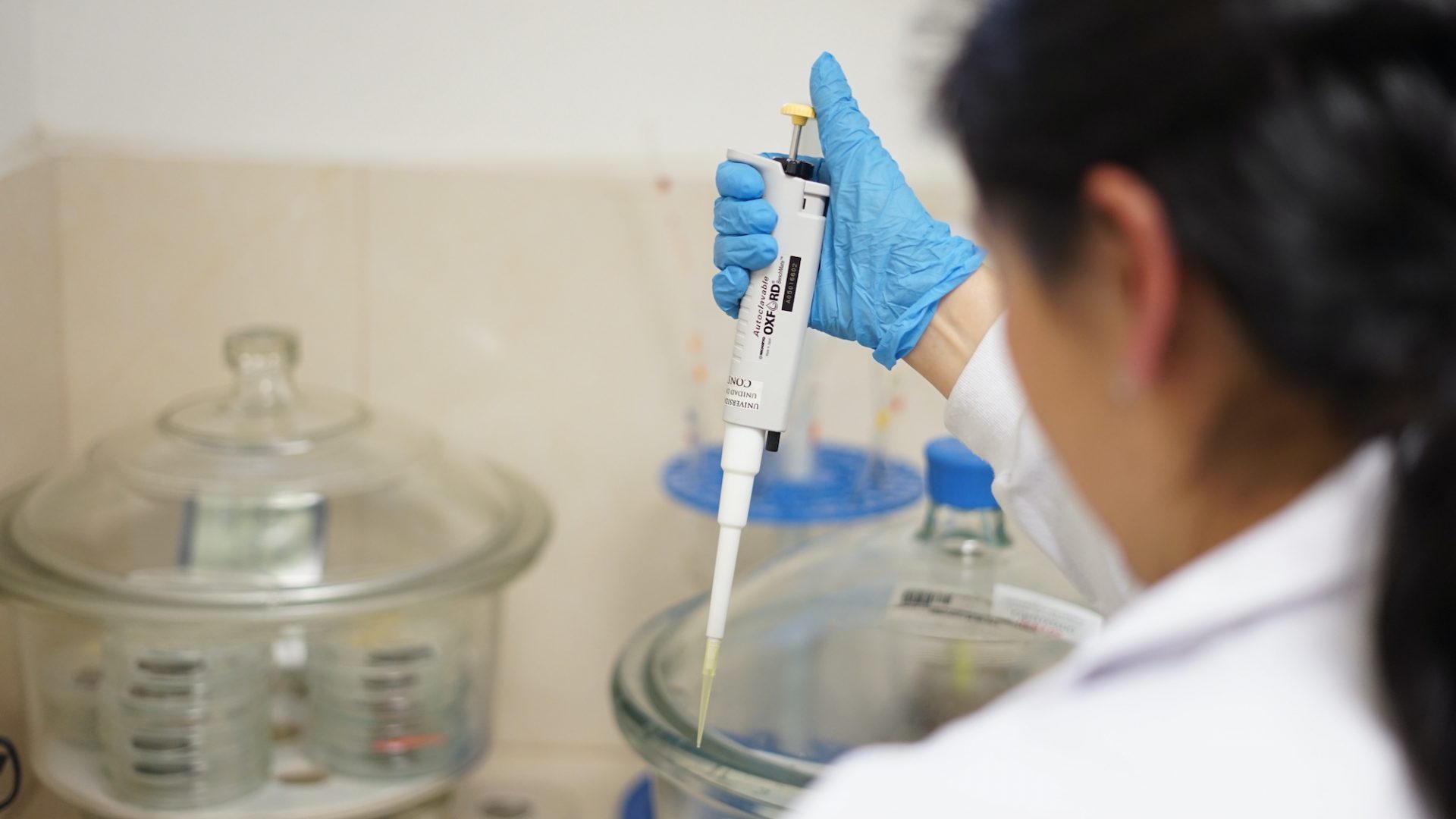
We prepare students to understand the processes in which matter undergoes a change of composition. In addition, they learn how these processes can be used to produce metallic materials and polymers, chemicals, medicines, cosmetics, paper, textile fibers, petroleum and its derivatives, biotechnology and water treatment, as well as everything that has a technological component in these sectors.
The learning environment includes access to laboratories and pilot plants, as well as to industrial and artisanal plants, and to software specialized in Chemical Engineering applications, such as MATLAB, AUTOCAD, ASPEN PLUS and ASPEN HYSIS.
General Information
| Degree Awarded: | Chemical Engineer |
| Level: | Third Level |
| Duration: | 10 semesters // 5 years |
| Mode of Study: | In-person |
| English Requirement: | PASLE B1 // Noveno ciclo |
Professional Profile
Upon completing their training, graduates will be able to:
- Effectively use specialized computer packages to solve operations, chemical process and plant design problems.
- Perform chemical analyses by operating laboratory equipment, using up-to-date analytical techniques and applying good laboratory practices to obtain reliable analytical results.
- Simulate industrial chemical processes and operations, using computational tools, to establish relationships between variables that allow appropriate decision making.
- Control experiments and processes in the field of Chemical Engineering that consider transport phenomena, unit operations, chemical processes, and operational research, in order to obtain relevant information and meet previously defined objectives.
- Implement quality, safety and industrial hygiene management systems that apply the corresponding technical quality and safety standards (ISO, OSHA and others) to comply with regulations inherent to production processes and other chemical engineering activities.
Field of Employment
- Quality and Operations Management.
- Supervision in production plants at industrial level.
- Management in research and development departments.
- Laboratory management or analysis.
- Management, Training and Technicians in public companies such as: Ministry of Environment, CGA, Municipal GADS.
- Integration of multidisciplinary teams in technical and administrative areas.
Malla curricular
Nivel 01
Nivel 02
Nivel 03
Nivel 04
Nivel 05
Nivel 06
Nivel 07
Nivel 08
Nivel 09
Nivel 01
Nivel 02
Nivel 03
Nivel 04
Nivel 05
Nivel 06
Nivel 07
Nivel 08
Nivel 09
Nivel 01
Nivel 02
Nivel 03
Nivel 04
Nivel 05
Nivel 06
Nivel 07
Nivel 08
Nivel 09
Description
This program trains professionals capable of controlling industrial processes that involve physical, chemical and biochemical changes, in order to promote the industrial development of the country in a sustainable and efficient manner. Furthermore, they can contribute to the transformation of materials and energy, with quality, safety, and respect for the environment.
Key Figures
0
Number of students admitted in the academic period september 2025 – february 2026
0
Number of graduates of the program
0
Number of graduates in the 2025
0
Number of students enrolled during the academic period march – august 2025
Educational Objectives
Professionals in the Chemical Engineering program, within 3 to 5 years after graduation, will be competent in:
- PEO1. Design, operate, optimize, and control chemical, physical, and biochemical processes for the transformation of materials and energy, meeting industrial and production sector demands with sustainability, safety, and quality criteria.
- PEO2. Apply chemical engineering principles to develop innovative and economically viable solutions that address societal needs and align with national development policies.
- PEO3. Work in disciplinary, interdisciplinary, and transdisciplinary teams, demonstrating social responsibility, environmental respect, professional ethics, and a strong commitment to the sustainable development of the production sector.
- PEO4. Promote a culture of continuous learning and the integration of new knowledge related to technological advancements to address the challenges of industrial development and the transformation of the productive matrix in a globalized context.
Learning Outcomes
Graduates of the Chemical Engineering program at the Universidad de Cuenca will be able to achieve the following competencies upon completing their studies:
- RA1. Ability to identify, formulate, and solve complex Chemical Engineering problems by applying principles of engineering, science, and mathematics.
- SO2. Ability to apply Chemical Engineering design principles to produce solutions that meet specific needs, considering public health, safety, and welfare, as well as global, cultural, social, environmental, and economic factors.
- SO3. Ability to communicate effectively with different audiences.
- SO4. Ability to recognize ethical and professional responsibilities in Chemical Engineering situations and make informed judgments, taking into account the global, economic, environmental, and social impact of engineering solutions.
- SO5. Ability to function effectively in a team, whose members together, exercise leadership, create an environment of collaboration and integration and establish goals, plan tasks and meet objectives.
- SO6. Ability to develop and carry out appropriate experiments, analyze and interpret data, and use technical judgment to draw conclusions.
- SO7. Ability to acquire and apply new knowledge as needed, using appropriate learning strategies.
Degree Projects
Capstone Projects are an opportunity for students to apply the skills, knowledge, and abilities acquired throughout the program.
No se encontraron docentes con el ID especificado.